

Over Moulding is the process that lets you combine a rigid plastic core with a softer rubber-like layer so the finished part has better grip, sealing, comfort, or impact resistance. If you want the service overview, start with Over Moulding.
What is over moulding, and why is bonding the make-or-break factor?
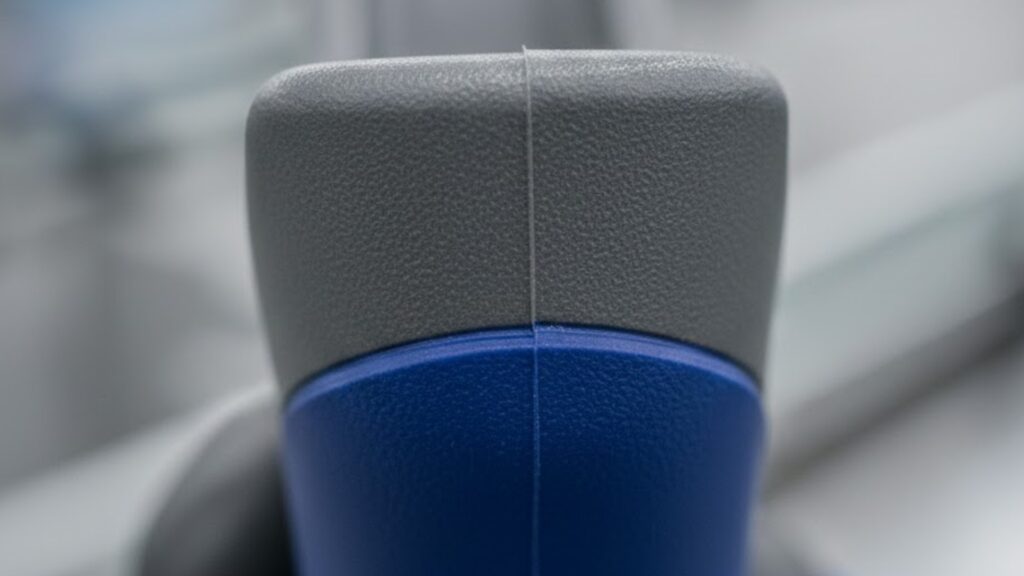
Over moulding is a manufacturing method where one material is moulded over another, most commonly a soft elastomer over a rigid plastic substrate. The goal is a single integrated part that feels like one piece, not two pieces glued together. Bonding is the make-or-break factor because if the materials do not bond properly you get peeling, delamination, water ingress, failure under flex, or the soft layer twisting off during use. Strong bonding is not luck, it is the result of correct material pairing, correct tool design, and a controlled moulding process.
Over Moulding: what causes weak bonds between plastic and rubber in the real world?
Most weak bonds come from incompatibility, contamination, or process drift. Incompatibility is when the rigid substrate and the overmould material do not naturally adhere or chemically interact, so they separate under stress. Contamination is surprisingly common: dust, oils from handling, release agents, or moisture on the substrate can block adhesion. Process drift happens when temperature, injection speed, packing pressure, or cooling changes enough that the interface does not form correctly. If you treat bonding like a controlled engineering outcome, you can prevent these failures before they reach production.
How do you choose material pairs that actually bond without fail?
Material pairing is the foundation. The rigid substrate might be PP, ABS, PC, nylon, or another engineering polymer, while the soft layer might be a TPE, TPU, or similar elastomer. The key is selecting a soft material grade designed to bond to the specific substrate family, not just “any rubber-like plastic.” The correct choice depends on temperature resistance, chemical exposure, UV, and how the part is used. If the application is in South Africa outdoors, for example, UV and heat cycling can punish weak bonds fast, so material compatibility and durability need to be specified upfront, not assumed.
What part design features help locking and bonding at the same time?
The best overmoulded parts are designed to bond in two ways: chemical adhesion plus mechanical interlock. Mechanical interlocks include undercuts, holes, grooves, ribs, and wrap-around edges that physically trap the overmould layer so it cannot peel even if adhesion is challenged. The goal is to design the interface so forces are distributed and the soft layer is not relying on a thin edge line to stay attached. Good design also avoids sharp corners and stress risers at the interface, because that is where delamination likes to start.
How does tool design influence bond strength and long-term durability?
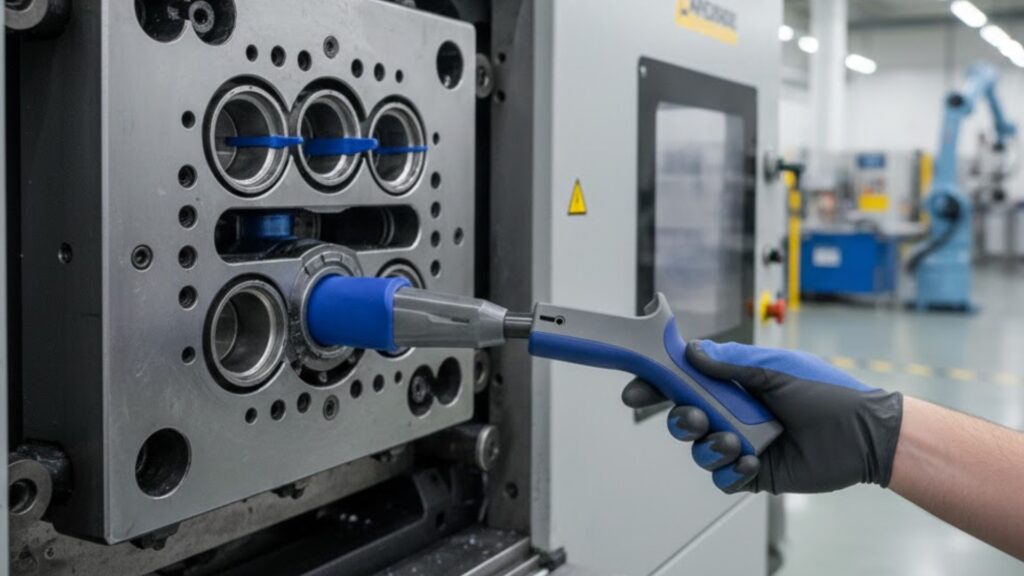
Tool design determines how accurately the second material is placed, how consistent the interface thickness is, and how repeatable the process stays over long runs. Poor venting can trap air at the bond line, poor gating can cause uneven flow and weak fusion areas, and uneven cooling can create internal stresses that pull the layers apart over time. Good tooling also ensures the first-shot substrate is held consistently so the second shot lands exactly where it should every cycle. For the tooling capability behind reliable overmoulding outcomes, use Mould Tool Making as the reference point.
What process settings matter most for strong bonding?
Bonding is sensitive to temperature and timing. If the substrate is too cold, the overmould material may not fuse properly at the interface. If melt temperature or injection speed is wrong, you can get poor wetting, trapped air, or a bond line that looks fine but fails under load. Packing and holding matter because the interface needs pressure long enough to form properly. Cooling matters because rapid or uneven cooling can create shrink forces that stress the bond line. The practical takeaway is that overmoulding needs a controlled window, not just “run it until it looks okay.”
How do surface prep and handling affect bonding in production?
Even with the perfect materials and tool design, bad handling can ruin adhesion. If substrates are touched with oily hands, stored dusty, exposed to moisture, or sprayed with release agents, bonding can fail unpredictably. The most reliable setups control storage, minimise handling, and keep the substrate clean and dry. If needed, surface activation methods like plasma or flame treatment can improve adhesion for certain combinations, but the first win is always eliminating contamination and ensuring consistent, repeatable preparation.
How do you test bond strength so failures show up before customers see them?
Testing should match real use. That can include peel tests, pull tests, torsion tests, and environmental cycling like heat, cold, and humidity exposure. The goal is to validate that the bond holds under the forces the product will actually experience, not only under gentle inspection. In practice, early sampling and structured testing catch issues like edge lift, twisting failures, and delamination that might not appear until the part has been flexed repeatedly or exposed to heat and cleaning chemicals.

How do you scale from samples to repeatable production without bond quality drifting?
Scaling successfully is about process control and tool care. You lock your process window, document the settings, confirm quality checks, and ensure the tool stays clean and maintained so vents, gates, and mating surfaces do not degrade over time. Drift can happen when materials change batch-to-batch, when operators adjust settings to chase cycle time, or when tool wear alters flow and venting. A stable overmoulding program treats bonding quality as a monitored output, not a one-time achievement during sampling.
What should you include in your brief so a South African supplier can deliver strong bonds?
Include the substrate material, the soft-touch or rubber performance you need, the environment the part will live in, and what failure would look like in use. Mention whether the part will see heat, UV, oils, solvents, cleaning chemicals, or repeated flexing, because those conditions influence material selection and interface design. Share drawings or CAD, target volumes, and any cosmetic requirements like texture or colour match. If you want to scope the project accurately, send the details through Contact Us. If you want the technical background on elastomers as a category, here is one Wikipedia reference: Thermoplastic elastomer.